Starting to invest on the Pakistan Stock Exchange (PSX) is exciting. You open an account, check prices on your mobile and imagine your savings growing. However, new investors can lose money through avoidable decisions as well as market movements.
This guide explains seven common PSX investing mistakes and practical ways to avoid them. Share prices can fall, and no strategy prevents every loss, but a few sensible habits can help you make better-informed decisions.
Mistake 1: Buying shares based on tips and rumours
A friend tells you that a share is “going to double”. A WhatsApp group has a “sure thing”. A social media post promises fast money. Many people buy immediately without doing their research.
Why it is a problem: By the time a tip reaches you, the price may already have risen. Early buyers may be looking to sell. Some rumours are also spread to push up prices for the benefit of those spreading them.
How to avoid it:
- Treat every tip as a starting point for your own research, not a reason to buy.
- Read the company’s latest financial results and announcements on the PSX website.
- Ask basic questions. What does the company do? Is it profitable? How much debt does it carry? Does it pay dividends?
- Be especially careful of anyone who promises guaranteed or very high returns. Returns from shares are not guaranteed.
Mistake 2: Putting all your money in one stock
It can be tempting to put all your money into one company you like. If it performs well, you benefit. If it performs badly, a large part of your savings may be at risk.
Why it is a problem: Every company faces risks, including declining profits, management problems, regulatory changes and events affecting its industry. Holding just one stock leaves your portfolio heavily exposed to those risks.
How to avoid it:
- Spread your money across several companies.
- Choose companies from different sectors, such as banking, energy, cement, fertiliser and technology, so one sector’s problems do not hit everything you own.
- Study established companies with clear financial disclosures while you learn, but remember that a large company is not automatically a safe or suitable investment.
- Diversification can reduce company-specific risk, but it does not eliminate market risk or prevent losses.
Mistake 3: Investing money you cannot afford to lose
Some new investors put in their emergency savings, money meant for rent or school fees, or funds they will need within a few months.
Why it is a problem: Share prices can fall and stay low for a long time. If you need the money at the wrong moment, you may be forced to sell at a loss. Money pressure also pushes people into bad decisions.
How to avoid it:
- Keep an accessible emergency fund separate from your investments. The amount you need depends on your expenses and circumstances.
- Only invest money you will not need for a long time.
- Decide in advance how much you can afford to risk, and stick to that limit.
- Start with a small amount, and add more as your knowledge and confidence grow.
Mistake 4: Borrowing money to invest
Borrowing from friends, family or lenders to buy shares can look like a shortcut to bigger profits.
Why it is a problem: Losses are not reduced just because the money was borrowed. You still have to repay the loan, with any interest or obligations attached, even if your shares have fallen. Borrowing makes losses heavier and stress higher.
How to avoid it:
- Invest only your own savings.
- Be cautious about any facility that lets you buy more than you can pay for, and make sure you understand the costs and risks before using it.
- Remember that leverage multiplies losses as well as gains.
Mistake 5: Letting emotions run your trades
Fear and greed can affect a beginner’s decisions. When prices rise, some investors rush in because they fear missing out. When prices fall, they may sell in panic.
Why it is a problem: Buying because everyone is excited and selling because everyone is scared often means you buy high and sell low, which is the opposite of what you want.
How to avoid it:
- Write down why you bought a share, and what would make you sell it, before you place the order.
- Think in months and years, not hours.
- Avoid reacting to every small price movement. Review your investments regularly against your plan.
- A limit order sets the maximum price you will pay, or the minimum price you will accept when selling. It does not guarantee that the order will be executed.
- If the market falls sharply, review the company’s fundamentals before acting. A lower price is not always a reason to sell.
Mistake 6: Ignoring costs and taxes
Beginners often look only at the share price and forget that every trade has costs, and that profits and dividends can be taxed.
Why it is a problem: Brokerage commission, applicable market and custody charges, and taxes reduce your net return. Frequent trading can make these costs add up. Tax treatment can depend on your status, the investment and the rules in force.
How to avoid it:
- Ask your broker for the full schedule of charges before you start.
- Check your FBR Active Taxpayers List status and ask your broker which tax details and documents are required for your account.
- Keep trade records and review your statements.
- Do not trade too often. Frequent buying and selling means more costs.
- Check the current tax rules, since they can change each year, or speak to a tax adviser.
Mistake 7: Using the wrong broker or being careless with your account
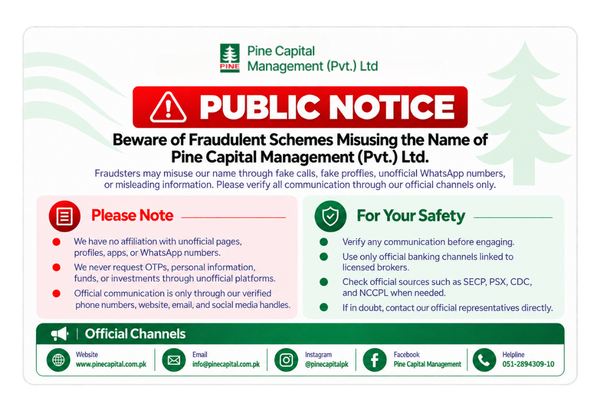
Not every offer you see online is genuine. Some people lose money to unlicensed operators, fake trading apps or schemes that promise guaranteed returns.
Why it is a problem: Your broker handles your orders and trading account. Dealing with an unlicensed operator or sharing your login details can put your money and personal information at risk.
How to avoid it:
- Use a PSX TREC holder with a valid SECP securities broker licence. Verify both the broker and its registered branch through official PSX records.
- Check that the broker shares its license details, charges and complaint procedure openly.
- Pay only to the broker’s official bank accounts, through traceable channels, and keep your receipts.
- Download trading apps only from official links provided by your broker.
- Never share your password, one-time codes or CDC login credentials with anyone.
- Walk away from anyone who promises guaranteed profits, asks you to pay into a personal account or pressures you to act immediately.
A simple checklist to avoid PSX investing mistakes
- I know what the company does and how it makes money.
- I have read its latest results and recent announcements.
- This investment is a small part of a diversified portfolio.
- I am using money I will not need soon.
- I know my broker’s charges and my tax position.
- I have decided how long I plan to hold, and what would make me sell.
- I am not buying because of a tip, a rumour or fear of missing out.
Frequently asked questions
What is the biggest mistake new investors make?
Buying based on tips and rumours without research is a common mistake. It can lead to decisions that do not match your financial circumstances or risk tolerance.
How much money should a beginner start with?
There is no single right amount. Start with a sum you can leave invested for a long time without affecting your daily life and increase it gradually as you learn.
Should I invest all my savings in the stock market?
No. Keep an emergency fund and money for near-term needs in safer places and invest only what you can afford to put at risk.
Is it better to buy many shares or just a few?
Spreading your money across several companies and sectors can reduce exposure to one company. Diversification does not remove the risk of market-wide losses.
Should I sell when the market falls?
Not automatically. Review why the price fell, whether the company’s fundamentals have changed, and whether the investment still fits your plan. A falling price alone does not tell you whether to buy, hold or sell.
How do I know if a broker is legitimate?
Check official PSX records to confirm that the firm is a TREC holder with a valid SECP securities broker licence. Verify its registered branch and review its charges and complaint procedure.
Can I lose all my money on the PSX?
Yes, it is possible to lose some or all of the money you invest. That is why research, diversification and using only money you can afford to lose are so important.
Start investing the right way with Pine Capital
If you are ready to begin, open your account with a licensed broker and take your first steps carefully. Our guide on How to Open a PSX Trading Account Online in Pakistan (Step-by-Step Guide) shows you how. Pine Capital Management (Pvt.) Ltd., based in ISE Towers, Blue Area, Islamabad, helps investors open PSX accounts digitally or in person. Open your account online or contact our team for help.
Risk disclosure: Investing in shares involves risk, including the possible loss of capital. Past performance does not guarantee future results. This article is for general information only and is not investment, tax or legal advice.